


Direct US Acquisition vs. Local Sourcing: The Logistics Math for the Shine 2.0 Turbine in South Korea
- Shine 2.0 Performance vs. Portable Solar Arrays
- US Retailers vs. Third-Party Resellers
- Standard Packaging vs. International Dimensional Standards
- Lithium-Ion Compliance vs. South Korean Customs Regulations
- Express Courier vs. Consolidated Freight Forwarding
- Final Logistics Calculation vs. Estimated Local Retail Price
Shine 2.0 Performance vs. Portable Solar Arrays
The transition toward renewable energy in the South Korean camping sector has seen a marked shift in 2026. While solar panels have dominated the landscape, the Shine 2.0 portable wind turbine offers a distinct advantage during overnight excursions or in the mountainous terrain of Gangwon-do where sunlight is often obstructed. Unlike solar panels that require direct UV exposure, this US-developed turbine generates 50W of power regardless of the time of day, provided there is a breeze. When monitoring current us trends, it is evident that off-grid enthusiasts are prioritizing consistency over peak output.
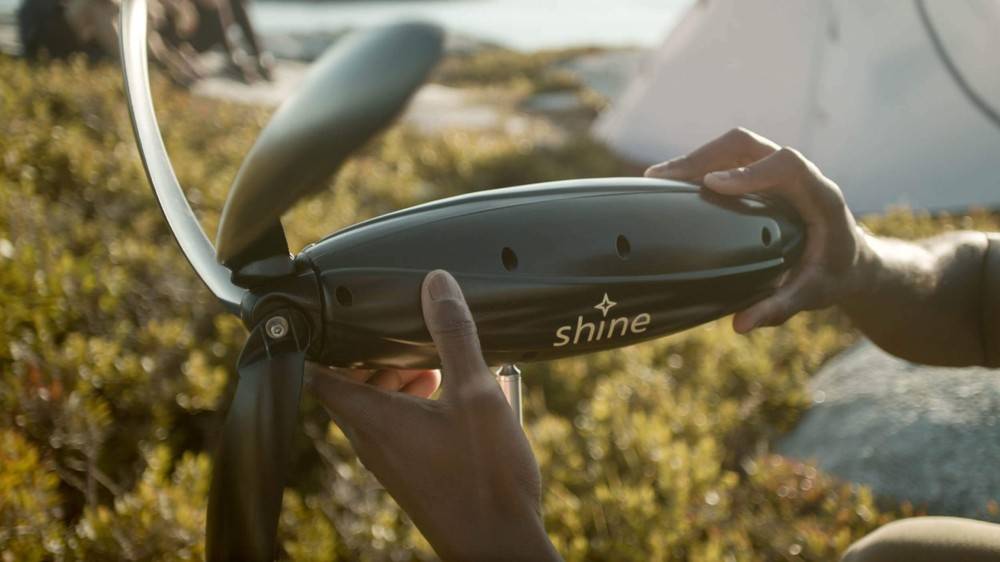
The technical superiority of the Shine 2.0 lies in its ability to operate in conditions where solar fails. For a professional outdoorsman in South Korea, the decision often comes down to energy reliability. The wind turbine functions as a continuous charging source for portable power stations, effectively doubling the utility of a standard battery setup. This reliability is the primary reason the unit has gained traction among the tech-savvy demographic in Seoul and beyond.
US Retailers vs. Third-Party Resellers
Acquiring high-demand tech often presents a choice between direct international purchasing and waiting for local stock. In 2026, the price discrepancy between US MSRP and South Korean retail markups remains significant. By choosing to shop us store sites directly, consumers bypass the middleman fees that typically inflate local prices by 20% to 35%.
Using a tax-free us address in Oregon allows South Korean buyers to avoid US domestic sales tax entirely. This tactical move ensures that the base cost of the Shine 2.0 remains as low as possible before international transit begins. When compared to the limited inventory found in local specialty shops, sourcing from the US provides both availability and cost-control advantages.
Standard Packaging vs. International Dimensional Standards
Understanding the physical footprint of the Shine 2.0 is essential for accurate budgeting. Logistics professionals must account for both actual weight and the space the package occupies in the cargo hold. Below is the technical estimation for shipping this unit to South Korea.
| Metric | Estimation |
|---|---|
| Box Weight | Approx. 4.0 lbs (1.8 kg) |
| Box Dimensions | 14 x 6 x 6 inches (35 x 15 x 15 cm) |
| Package Type | Medium Cylinder/Rectangular Box |
The Shine 2.0 is highly compact, folding down to the size of a large water bottle. Because of this density, it rarely triggers a Volumetric Weight surcharge. Most international shipping rates will be calculated based on the actual weight rather than the dimensions. However, always ensure the retailer does not use an excessively large outer box, as this could lead to unnecessary costs. You can use a shipping calculator to verify the final cost once the merchant provides the tracking details.
Lithium-Ion Compliance vs. South Korean Customs Regulations
The Shine 2.0 contains an internal lithium-ion battery used to store generated power. In the world of international logistics, batteries are classified as dangerous goods. This requires specific labeling and documentation. When shipping to South Korea, the courier must adhere to IATA regulations for UN3481 (Lithium-ion batteries contained in equipment).
It is mandatory to confirm that your chosen freight forwarder has the certification to handle lithium batteries. Some economy carriers may refuse these items, making it necessary to utilize premium services like FedEx or DHL. For detailed information on restricted items, you should consult the support section or the help center of your logistics provider.
Express Courier vs. Consolidated Freight Forwarding
For a single unit like the Shine 2.0, express shipping is often the most logical choice. However, savvy shoppers often combine multiple purchases from different US stores to reduce the per-item shipping fee. This consolidation strategy can significantly lower the total landed cost.
When the package arrives in South Korea, it will undergo customs clearance. Because the value of the Shine 2.0 typically exceeds the $150 USD de minimis threshold for South Korea (from the US), import duties and a 10% VAT will be applied. Calculating these customs tax obligations in advance prevents unexpected delays at the port of entry. You might also like to review our detailed breakdown on South Korean tax thresholds to ensure your paperwork is in order.
Final Logistics Calculation vs. Estimated Local Retail Price
The decision to import the Shine 2.0 directly from the United States is supported by the math. Even after accounting for shipping fees and import tax, the total cost generally remains lower than the projected 2026 retail price in South Korea, where high-end outdoor tech carries a heavy premium.
By leveraging a comGateway account, you gain access to a streamlined shipping pipeline that handles the complexities of battery compliance and international documentation. For the South Korean consumer looking to maximize their outdoor power capabilities, the logistics of direct import are not just a preference but a financial necessity. Ensure you use the estimate shipping cost tool before checkout to confirm your savings in real-time.
-
April 03, 2026
Shine 2.0 Portable Wind Turbine vs. Portable Solar: Does this US-made turbine actually justify the international shipping costs to Singapore?
The Shine 2.0 Portable Wind Turbine is challenging solar dominance. We analyze whether this US tech is worth the logistics of importing to Singapore in 2026.Continue Reading
-
April 03, 2026
US Shine 2.0 Turbine Prices vs Australian Local Costs
Compare US prices for the Shine 2.0 Portable Wind Turbine against local Australian costs and learn how to ship it directly to your door in 2026.Continue Reading
-
April 03, 2026
Does the Shine 2.0 Portable Wind Turbine provide the missing link for off-grid power in Malaysia?
Is it feasible to maintain a consistent 40-watt power output in the dense rainforests of Sarawak or the highlands of Pahang without relying on solar exposure?Continue Reading
-
April 03, 2026
Save $115 on Shine 2.0 logistics by bypassing direct US to Hong Kong shipping obstacles
A professional analysis of procurement strategies for the Shine 2.0 Portable Wind Turbine in the 2026 Hong Kong outdoor market.Continue Reading
-
April 03, 2026
New Zealand logistics protocols for the Shine 2.0 Portable Wind Turbine require attention
Shipping the Shine 2.0 Portable Wind Turbine to New Zealand involves specific battery and customs regulations that can lead to seized packages if ignored.Continue Reading

