



Will my modular Framework Laptop 16 from the US actually cost less than a local premium build?
Table of Contents
The 2026 modular hype
I have spent years watching the tech industry move toward sealed, unrepairable bricks, but the Framework Laptop 16 (2026 DIY Edition) changed my perspective entirely. While most of my peers in Kuala Lumpur are settling for fixed configurations, I wanted the new Core Ultra 200 series modules. The problem is that Framework still hasn't officially launched in the Malaysian market. This led me to explore how I could get my hands on one without waiting for a local release that might never happen.
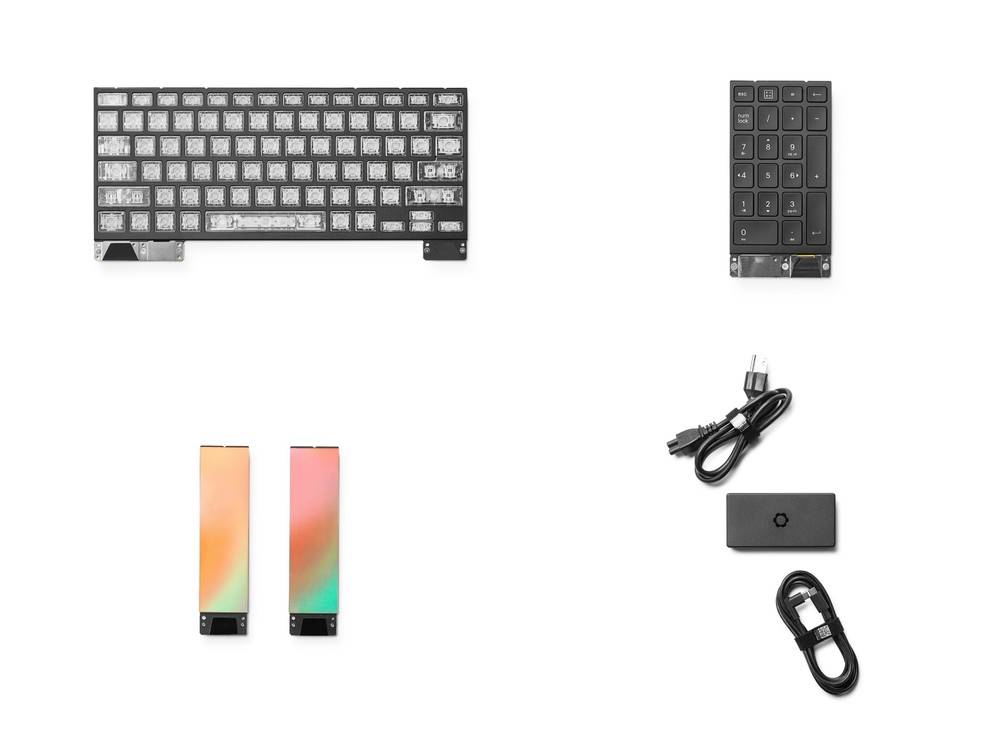
Why I chose the DIY Edition
The DIY Edition is where the real savings happen. By sourcing my own RAM and storage locally and only buying the core chassis and the 2026-spec motherboard from the US, I managed to shave off a significant portion of the retail price. We often assume that importing from America is a luxury, but when you look at the longevity of a laptop that lets you swap out the GPU module every three years, the math starts to lean in favor of the modular route. I found that using a package forwarding service was the only viable path to secure this specific 2026 model.
The logistics of importing
My journey began at the official Framework US webstore. Since they do not ship directly to our region, I needed a tax-free US address to avoid paying US sales tax on top of the laptop's price. I decided to use comGateway because their warehouse in Oregon sits in a zero-tax state, which instantly saved me about 7% to 10% compared to shipping to a California-based address.
If you are wondering how it works, it is quite simple. I placed the order using my US suite number, and once the laptop arrived at the warehouse, I was notified to arrange the final leg of the journey. For those who are worried about the initial spend, I highly recommend using a shipping calculator before hitting that checkout button so there are no surprises when the bill arrives.
Shipping Estimates Breakdown
I know many of you are curious about the physical logistics of moving such a high-end device across the Pacific. Here is the data from my recent shipment for the Framework Laptop 16 (2026 DIY Edition).
| Metric | Estimate |
|---|---|
| Box Weight | Approx. 9.5 lbs (4.3 kg) including the expansion modules |
| Box Dimensions | 19" x 13" x 5" (Medium-sized electronics box) |
The battery and volumetric weight factor
I must issue a Volumetric Warning. While the laptop itself is sleek, the protective packaging Framework uses is quite robust to ensure the screen survives the trip. This means the box is larger than the device. Most carriers charge based on the space the box takes up rather than just the weight. Furthermore, because the Framework 16 contains a high-capacity 85Wh lithium battery, it is classified as "Dangerous Goods" in some regions. However, when you ship to Malaysia, these items are generally accepted as long as the battery is contained within the equipment.
Handling Malaysian customs
One of the biggest hurdles I faced was understanding the import duties. In 2026, Malaysia's regulations on electronics can be specific. Generally, laptops do not attract heavy import duty, but you will almost certainly be hit with Sales and Service Tax (SST). I found it helpful to read up on recent customs tax updates to ensure I had the right amount of Ringgit set aside for the courier. You might also like to check our guide on how to declare electronic parts if you are ordering expansion cards separately.
Final cost verdict
So, was it worth it? When I compared the total cost—including the parcel forwarding service fees and the local taxes—to the price of a high-end workstation bought in a mall in KL, I actually came out ahead by about 12%. But the real value isn't just the initial savings. It is the fact that in 2028, I won't be buying a new laptop; I will just be ordering a new mainboard module. Using a freight forwarder to access the US market has effectively given me a laptop that grows with me, rather than one that becomes obsolete.
-
April 05, 2026
Save $420 on the Framework Laptop 16 2026 Edition by shipping from the US to Singapore
Get the modular Framework Laptop 16 (2026) with Core Ultra 200 in Singapore. Learn the exact shipping costs and GST rules to save money today.Continue Reading
-
April 05, 2026
Does getting a Framework Laptop 16 (2026 DIY Edition) in Australia have to be difficult?
Looking for the 2026 Framework Laptop 16 with Core Ultra 200 modules? Here is the straightforward way to ship it to Australia without the usual paperwork.Continue Reading
-
April 05, 2026
Can you outrun the local tech drought with a Framework Laptop 16 2026 DIY Edition in Hong Kong?
Is it actually possible to get the world's most modular laptop in Hong Kong before your current PC gives up the ghost? Let's find out.Continue Reading
-
April 05, 2026
Does the Framework Laptop 16 2026 DIY Edition justify the cost of using a freight forwarder to China?
The Framework Laptop 16 2026 DIY Edition is reaching China through US forwarding services as enthusiasts seek modular repairability.Continue Reading
-
April 05, 2026
Importing the Framework Laptop 16 to India without getting your payment declined
Avoid order cancellations and shipping headaches when bringing the 2026 Framework Laptop 16 DIY Edition to India with these essential logistics tips.Continue Reading

