



Table of Contents
My assessment of the Framework Laptop 13 2026 Refresh
I have spent the last few weeks analyzing the performance benchmarks of the new Intel Core Ultra Series 2 chips. The 2026 Framework Laptop 13 refresh has become a central point of discussion among my colleagues in the tech sector because it solves the longevity problem that plagues most modern ultrabooks. By allowing users to swap the mainboard, battery, and even the screen with ease, we are seeing a shift toward sustainable hardware that actually makes financial sense in the long run.
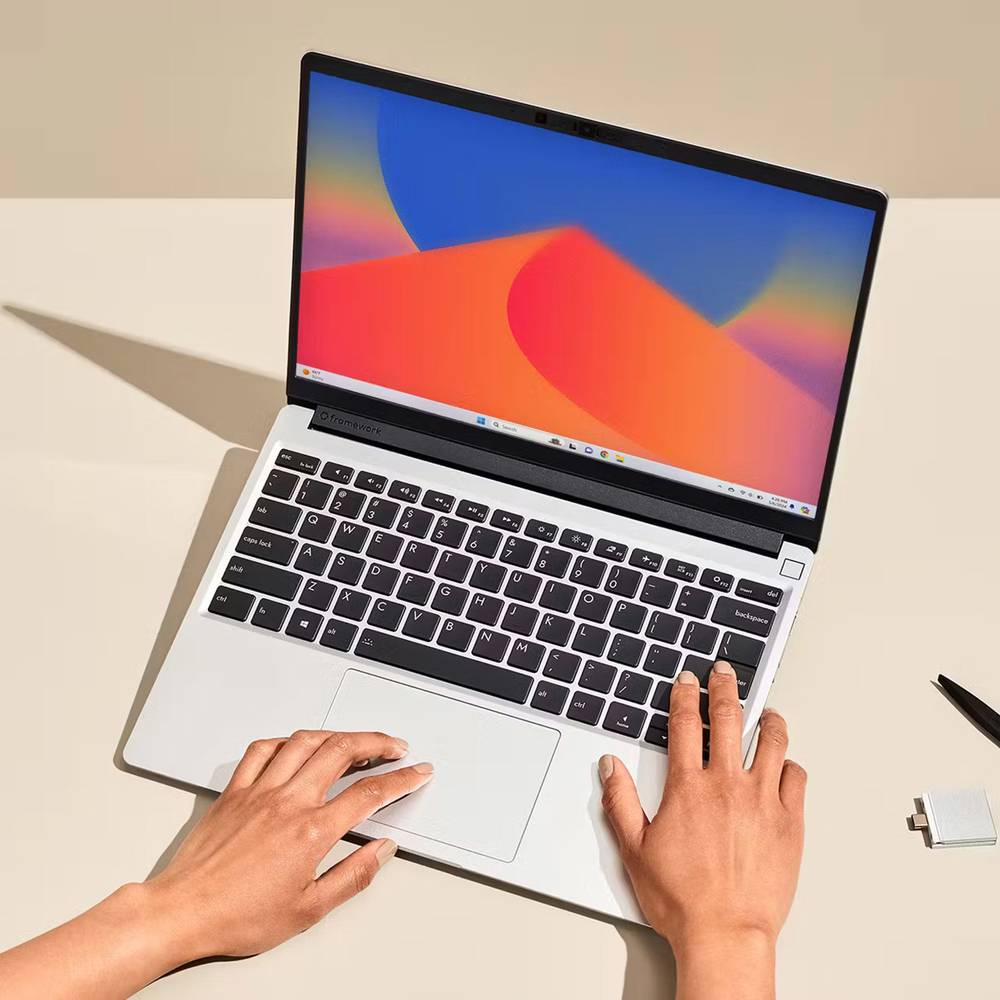
The 2026 model is particularly attractive due to its improved thermal management and the efficiency gains of the newest Intel architecture. However, the current limitation is availability. As of March 2026, Framework is primarily shipping these units to North American addresses. For those of us living in South Korea, this requires a strategic approach to logistics. I decided to document my process of using an international shipping service to bridge this gap.
Why I chose to buy from the US store
I found that the price delta between waiting for a potential local release and purchasing directly from the US was significant. When you factor in the ability to customize every expansion card at the point of sale, the US store offers a level of flexibility we simply can't find elsewhere yet. To facilitate this, I utilized comGateway to obtain a tax-free us address in Oregon. This allowed me to avoid US sales tax entirely, which is a critical step in the "smart shopper" methodology I advocate for.
By using a freight forwarder, I was able to manage the entire transaction as if I were a local US resident. This is often the most efficient way to access cutting-edge tech before it hits the global mass market. We often see a 6 to 12-month delay for modular components to reach Asian retailers, and for a professional, that time loss is unacceptable.
The step-by-step guide to my shipping process
My journey started with a visit to the Framework website. After selecting my Core Ultra Series 2 configuration, I entered my dedicated US warehouse address. If you are new to this, I recommend looking at this how it works page to understand how the package moves from the retailer to the warehouse and then to your doorstep in South Korea.
Once the laptop arrived at the warehouse, I was notified of the actual weight. I always use a shipping calculator before I even place an order to ensure there are no surprises regarding the final invoice. For a laptop, the costs are usually quite predictable, but it is better to be precise. I then selected an international shipping option that provided robust tracking, which is essential for high-value electronics.
Shipping estimates and battery regulations for South Korea
To help you plan your own purchase, I have compiled the estimated logistics data for the Framework Laptop 13 (2026 Refresh). These figures are based on my recent shipment and typical packaging for 13-inch laptops.
| Attribute | Details |
|---|---|
| Box Weight | Approx. 2.5 kg (5.5 lbs) including external protective packaging. |
| Box Dimensions | Medium (Approx. 38cm x 28cm x 12cm). |
| Volumetric Warning | Low. Laptops are dense. You will likely be charged based on actual weight rather than size. |
| Battery Check | Contains a Lithium-ion battery (PI967). Shipping is permitted but requires specific labeling. |
When you shop us ship international, remember that South Korea has strict regulations regarding lithium batteries. Most reputable package forwarding services are well-versed in these rules. Since the battery is contained within the laptop, it falls under the PI967 category, which is generally easier to ship than loose batteries, but it still requires a declaration.
The math of importing versus waiting for local availability
The real question is: does the math work? In my case, the Framework 13 base model with the Intel Core Ultra 2 was priced at $1,099. By shipping to a tax-free us address, I saved roughly $90 in US sales tax. The shipping cost to South Korea was approximately $45, and the 10% VAT upon arrival in Korea was roughly $110. My total landed cost was about $1,254.
Compare this to local high-end ultrabooks in Seoul, which often retail for 1,800,000 KRW or more for similar specs (roughly $1,370 USD). Not only did I get the specific modular hardware I wanted, but I also saved over $100. This is the core of being a smart shopper in the 2026 tech market. We don't just look at the MSRP; we look at the total logistics chain. Using a reliable parcel forwarding service ensures that the item is handled correctly during the long-haul flight across the Pacific.
I also recommend checking for any promotional codes or consolidation options if you plan on buying extra expansion cards or the Framework factory seconds parts. If you are ordering multiple items, a freight forwarder can combine them into one box, which significantly reduces the per-item shipping cost.
-
March 14, 2026
Is there a secret pathway for Singaporeans to secure the Framework Laptop 13 Intel Core Ultra Series 2?
The 2026 Framework Laptop 13 Intel Core Ultra Series 2 is finally here, but shipping is restricted. Here is how Singaporean techies can get it safely.Continue Reading
-
March 14, 2026
Urgent Australia Alert: Secure the Framework Laptop 13 Intel Core Ultra Series 2 and Save $420 on Local Markups
Immediate action required for Australians wanting the 2026 Framework Laptop 13. Secure the Intel Core Ultra Series 2 today without the paperwork headache.Continue Reading
-
March 14, 2026
Importing the Framework Laptop 13 2026 Refresh to Malaysia now
Get the Framework Laptop 13 Intel Core Ultra Series 2 delivered to Malaysia quickly by using a US freight forwarder and professional proxy shopping services.Continue Reading
-
March 14, 2026
Save $350 on the 2026 Framework Laptop 13 by outsmarting US store blocks
The 2026 Framework Laptop 13 Intel Core Ultra Series 2 is here. Learn why China-based techies are sourcing it from the US to save big and avoid local markups.Continue Reading
-
March 14, 2026
Securing the Framework Laptop 13 2026 Refresh at US retail prices for Hong Kong delivery
Acquire the latest Intel Core Ultra Series 2 Framework Laptop 13 from the US and manage the logistics for a seamless Hong Kong delivery in 2026.Continue Reading

