



Does the Framework Laptop 13 DIY Edition justify international shipping costs to New Zealand?
Table of Contents
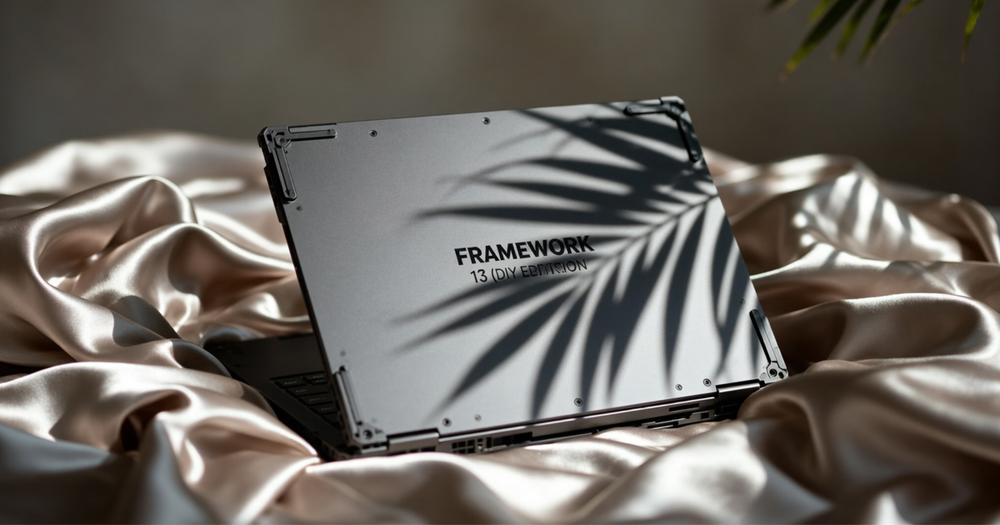
The Framework Laptop 13 DIY Edition is currently the standard for modular computing. For tech enthusiasts in New Zealand, the appeal of a laptop that permits full component control is significant, especially as the global 'Right to Repair' movement reaches new heights in 2026. While local options exist, the US DIY Edition offers a level of customization and access to expansion modules that are often restricted in smaller markets.
 Amazon US
The repairability movement in 2026
Consumers are increasingly skeptical of hardware that is designed with planned obsolescence. The Framework Laptop 13 DIY Edition addresses this by allowing users to swap out mainboards, screen bezels, and even the keyboard layout with minimal tools. In 2026, this modularity is not just a niche hobby; it is a professional requirement for those who cannot afford downtime. By purchasing the DIY Edition from the US, users gain access to the widest variety of expansion cards, including specialized ports that are not yet common in the Australasian retail sector.
Why the US DIY Edition remains the enthusiast choice
The US market receives the first wave of module releases, including high-performance cooling upgrades and the latest battery chemistry variants. For a Kiwi professional, the ability to source these components directly from a US storefront is a major advantage. To facilitate this, many users choose to shop US store options using a dedicated tax-free US address. This method bypasses regional stock limitations and ensures you are getting the exact configuration required for your workflow.
Shipping Estimates for New Zealand
When planning your purchase, understanding the physical logistics is vital to avoid surprises. Below are the estimated specifications for a standard Framework Laptop 13 DIY Edition package.
| Attribute | Details |
|---|---|
| Box Weight | Approx. 2.5 kg (5.5 lbs) including the laptop, modules, and protective packaging. |
| Box Dimensions | Medium (Approx. 40cm x 30cm x 10cm). |
| Volumetric Warning | The packaging is relatively dense. While volumetric weight is calculated, it is unlikely to exceed the actual weight unless bundled with very large, light items. |
| Battery Check | This item contains a Lithium-ion battery (UN3481). It must be shipped according to international dangerous goods regulations for equipment containing batteries. |
Check our guide on restricted goods to ensure your specific configuration complies with current 2026 aviation safety standards. Most integrated batteries are acceptable under PI967 guidelines, but it is always best to verify.
Managing the international shipping process
Getting your hardware from a US warehouse to Auckland or Christchurch requires a reliable **freight forwarder**. The process involves the store shipping to your US address, followed by the forwarder handling the long-haul transit. You can use a shipping calculator to **estimate shipping cost** based on the 2.5 kg weight mentioned above.
If you are new to this method, review this step-by-step guide on how the forwarding process functions. It is often more cost-effective than direct international retail shipping because it allows for package consolidation if you are also buying extra expansion cards or external peripherals from different US vendors. You should also compare international shipping rates to choose the speed that fits your budget.
New Zealand import duties and GST considerations
New Zealand law requires GST to be paid on most imported goods. For a high-value item like the Framework Laptop 13 DIY Edition, which typically exceeds the NZD $1,000 threshold, you must be prepared for the formal entry process. While laptops generally enjoy a 0% duty rate in New Zealand, the 15% GST is calculated on the combined cost of the item and the shipping fees.
You might also like our detailed breakdown on import duties and how to handle customs tax for high-end electronics. Factoring these costs in advance ensures that your modular laptop remains a smart investment rather than an unexpected expense. In 2026, the efficiency of the New Zealand Customs Service means that if your paperwork is handled correctly by your forwarder, clearance typically occurs within 24 to 48 hours of arrival.
The decision to import the Framework Laptop 13 DIY Edition ultimately depends on your need for specific US modules and the desire for a truly repairable machine. While the logistics require a few extra steps, the long-term benefit of a laptop that can be upgraded for years to come often outweighs the initial effort of international transit.
-
February 05, 2026
Framework Laptop 13 DIY vs. Local Pre-builts: Why Singapore techies are looking West in 2026
The Framework Laptop 13 DIY Edition is capturing the interest of Singaporean tech enthusiasts. Is importing this modular laptop better than buying local?Continue Reading
-
February 05, 2026
Why is the Framework Laptop 13 DIY Edition still restricted for Australia in 2026?
Shipping electronics to Australia requires specific logistics when US retailers restrict access to modular hardware like the Framework Laptop 13 DIY Edition.Continue Reading
-
February 05, 2026
Framework Laptop 13 DIY Edition vs. Local Supply Gaps: The High-Speed Import Strategy for Malaysia
Acquiring the Framework Laptop 13 DIY Edition in Malaysia requires a strategic logistics approach to bypass regional availability gaps and payment blocks.Continue Reading
-
February 05, 2026
Sourcing the Framework Laptop 13 DIY Edition from the US to China in 2026
Discover why tech enthusiasts in China are bypasssing local options to secure the modular Framework Laptop 13 DIY Edition directly from the United States.Continue Reading
-
February 05, 2026
I found a way to get the Framework Laptop 13 DIY Edition delivered to Hong Kong with almost zero effort
I finally got my Framework Laptop 13 (DIY Edition) from the US to Hong Kong. Here is my experience using a simple method to avoid the paperwork.Continue Reading

